 ReactionTimeTests
Audio Reaction Time Test
Measure your auditory reflex speed in milliseconds. Click the moment you hear the beep — most people react 30-40ms faster to sound than to light.
Listen for the beep, then click
Tips for Best Results
Use headphones for the most accurate results—speakers add air travel delay.
Try closing your eyes and focusing purely on listening. Many users find this improves their reaction time by 10-20ms.
Your auditory cortex processes sound in 8-10ms, faster than visual processing at 20-40ms. That's why audio reaction is naturally quicker!
What is an Audio Reaction Time Test?
An audio reaction time test measures how quickly your brain processes a sound and triggers a physical response. Unlike a visual reaction test where you respond to a color change, this test plays a short beep at a randomized moment — your job is to click the instant you hear it.
Auditory reaction time is one of the most studied benchmarks in cognitive science. It isolates the neural pathway from your ear → auditory cortex → motor cortex → finger, and reveals how fast that signal chain runs in your body. The fastest measurable human auditory reaction is around 100-120ms — anything below that is anticipation, not real reaction.
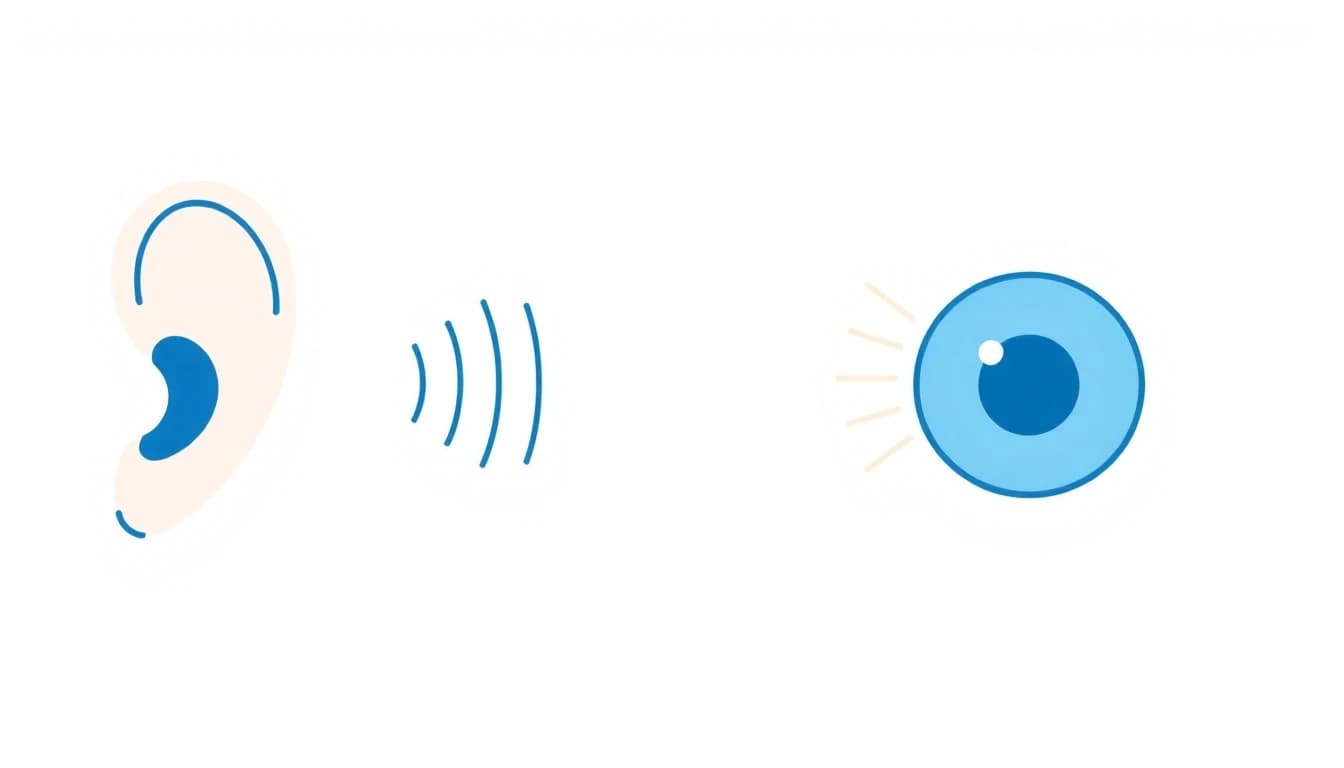
Why Audio Reaction Is Faster Than Visual
Your auditory cortex processes sound in just 8-10 milliseconds. Visual processing takes 20-40ms because light has to be converted by photoreceptors in the retina before reaching the visual cortex. That biological gap is why most people score 30-40ms faster on an audio reaction test than on a visual one.
This is also why a sprinter's starting gun is auditory rather than visual — track athletes have an unfair advantage when the cue is sound. The current IAAF rule even bans reactions under 100ms because no human ear-to-foot pathway can legitimately fire that fast.
Audio Reaction Time by Age
Auditory reaction speed peaks in your early 20s and declines roughly 1-2ms per year afterward. Below is the average audio reaction time across age groups, based on aggregated test data and published research.
Average Audio Reaction Time (ms) by Age Group
Data compiled from peer-reviewed studies including Der & Deary (2006) and large-scale online benchmarks. Individual results vary ±20ms.
Factors That Affect Your Audio Reaction Time
Headphones vs Speakers
Wired headphones add zero latency. Bluetooth headphones add 40-200ms — that ruins this test. Speakers add 3ms per meter of air travel.
Volume and Frequency
Mid-frequency sounds (1-4 kHz) are processed fastest because the human ear is most sensitive there. Whisper-quiet beeps slow you down by 15-30ms.
Caffeine and Alertness
200mg caffeine improves auditory reaction time by 5-15ms on average. Sleep deprivation slows it 30-100ms.
Background Noise
Quiet environments improve scores. A noisy café can add 50ms+ as your brain works to filter the beep from background sound.
Age and Hearing Loss
Hearing loss above 4 kHz (common after 40) delays signal detection. Reaction time slows even when the beep is still audible.
Musicians and Trained Listeners
Studies show trained musicians have 10-25ms faster auditory reaction times due to enhanced neural plasticity in the auditory cortex.
How to Improve Your Audio Reaction Time
Audio reaction time is partly biological, partly trained. Most people can shave 20-40ms off their score with a few weeks of focused practice.
Use wired headphones with a low-latency DAC. Bluetooth, even with aptX Low Latency, still adds enough delay to mask any improvement.
Close your eyes during the test. Removing visual input lets your brain dedicate full processing bandwidth to the auditory channel.
Practice 5-10 minutes daily. Reaction time improves with repetition — your brain optimizes the auditory-motor pathway through use.
Time your test when alert: mid-morning after coffee, not late evening. Circadian rhythm affects reaction speed by 20-50ms.
Train with rhythm games or drum machines. Forcing your brain to predict and react to audio cues transfers directly to this test.
Stay hydrated. Even 2% dehydration slows neural conduction noticeably — most people see 15-25ms improvement after drinking water.
Avoid alcohol and antihistamines for 12 hours before testing. Both depress central nervous system processing.
Where Audio Reaction Time Matters
Esports and Competitive Gaming
FPS players who use audio cues (footsteps, gunshot direction) win more gunfights. Pros score 140-180ms on audio reaction tests vs 200ms+ for casuals.
Music and Drumming
Drummers and live musicians need sub-150ms timing accuracy. Audio reaction speed predicts rhythmic precision.
Track and Field Sprinting
100m sprint reaction times average 130-160ms. Anything under 100ms triggers a false start under IAAF rules.
Aviation and Emergency Response
Pilots and emergency dispatchers train auditory reaction to alert tones. Faster scores correlate with better cockpit performance.
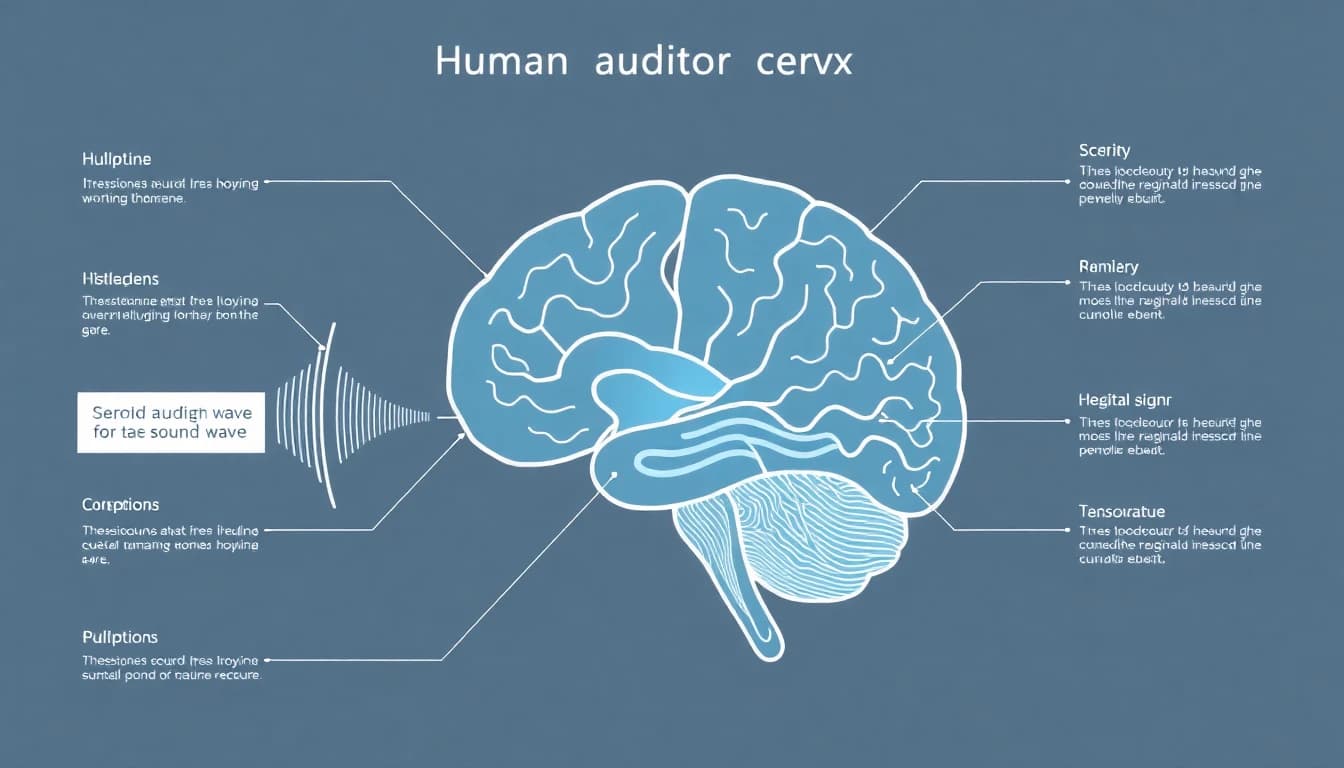
The Science Behind Audio Reaction
When sound enters your ear, the cochlea converts it to electrical signals in roughly 1ms. That signal travels through the auditory nerve to the brainstem (~3ms), then to the auditory cortex (~5ms). Total: 8-10ms before your brain even "hears" the beep.
From there, the motor cortex prepares the click command (~80-120ms), and the spinal cord delivers it to your finger (~20-30ms). Adding it all up, the biological floor for audio reaction is around 100-120ms — confirmed across hundreds of studies including Welford (1980) and Kosinski (2008).
Audio Reaction Time Test FAQ
Common questions about auditory reaction speed and what your score means.
Under 180ms is considered good for an audio reaction time test. Most adults score between 170-220ms. Elite gamers and athletes achieve 140-160ms, while scores under 130ms are exceptional and rare.
Your auditory cortex processes sound in 8-10ms, while visual processing takes 20-40ms because light must first be converted by retinal photoreceptors. This biological gap makes audio reaction times 30-40ms faster on average.
The average auditory reaction time for adults aged 20-40 is around 170-220ms. The fastest measured human audio reaction is approximately 100-120ms, which is the biological floor — anything below that is anticipation rather than true reaction.
Always use wired headphones for accurate audio reaction time testing. Bluetooth headphones add 40-200ms of latency that completely invalidates the test. Speakers add about 3ms per meter of distance from your ears.
Yes. Audio reaction time peaks in your early 20s (around 170ms) and slows by approximately 1-2ms per year. By age 60, average scores rise to 220-260ms. Regular practice can offset most age-related decline.
Yes. Most people improve 20-40ms within a few weeks of daily 5-10 minute practice. Wired headphones, eyes closed, mid-morning testing, and hydration all help. Rhythm games and drumming transfer directly to faster auditory reaction.
If your audio score is slower than visual, check your hardware first — Bluetooth headphones add huge delays. Hearing issues at high frequencies (4kHz+) can also slow detection. Background noise forces your brain to filter, adding 50ms or more.
humanbenchmark.com only offers a visual reaction test. This audio reaction time test isolates the auditory pathway, which is naturally 30-40ms faster. You can't directly compare scores between the two tests — they measure different neural circuits.
Yes. Studies on trained musicians show 10-25ms faster auditory reaction times than non-musicians, due to enhanced neural plasticity in the auditory cortex. Years of rhythmic training rewire how quickly the brain processes timed sound.
The fastest validated audio reaction times in laboratory settings are around 100-120ms, achieved by elite sprinters reacting to a starting gun. Anything below 100ms is ruled a false start under IAAF rules because it's biologically impossible to react that fast.