 ReactionTimeTests
Driving Reaction Time Test
Measure how fast you brake when a stop sign appears. The average driver reacts in 250ms — at 60 mph, that's 22 feet of travel before you even start braking.
Driving Reaction Test
Click or press SPACE to start driving
What is a Driving Reaction Time Test?
A driving reaction time test measures how quickly you can move your foot from the accelerator to the brake pedal after spotting a hazard. It simulates the most critical moment in driving — the gap between seeing danger and starting to slow down. This gap, called perception-reaction time, is what separates a near-miss from a serious crash.
The average driver reaction time in real-world conditions is 1.0 to 1.5 seconds, which includes perceiving the hazard, deciding to brake, and physically pressing the pedal. Pure neural reaction (the part this test isolates) averages 200-300ms. The longer total time accounts for cognitive processing under real driving stress.
Reaction Time and Stopping Distance
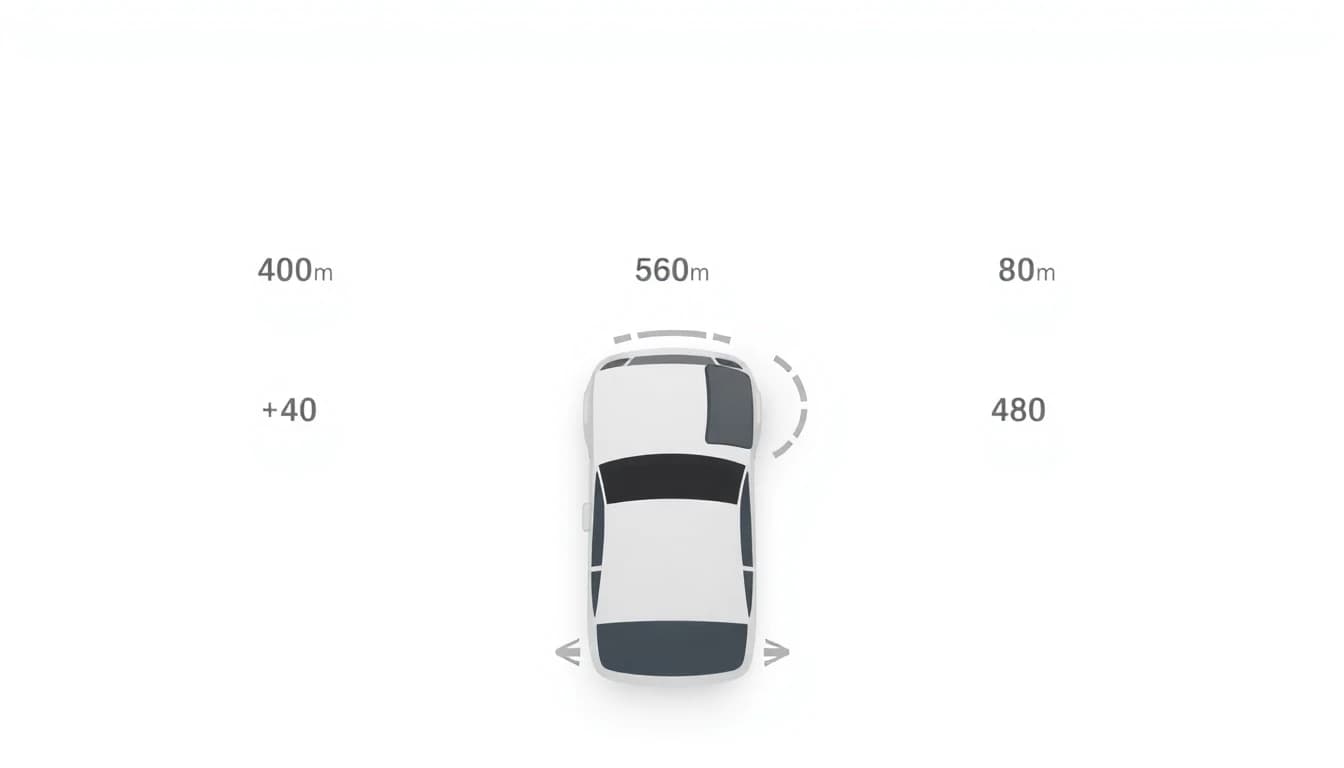
Total stopping distance has two parts: reaction distance (how far you travel while reacting) and braking distance (how far you travel after pressing the brake). Reaction time directly determines the first.
At 40 mph, a car covers 59 feet per second. With a 250ms reaction time, you travel 14.75 feet before the brake even engages. At 60 mph, that grows to 22 feet — over a car length of "blind" forward motion. At 80 mph it's 29 feet.
This is why speed limits compound risk. Doubling speed from 30 to 60 mph quadruples braking distance, but reaction distance only doubles — meaning at higher speeds, reaction time becomes a smaller percentage of the total stop, but the absolute feet traveled before braking grows linearly.
Driving Reaction Time Benchmarks
Driving Reaction Time by Age
Driving reaction speed peaks in the late teens and early 20s, then gradually slows. Insurance industry data and reaction time research show clear age-based trends. This is one reason why insurance premiums drop in your 30s but rise again after 65.
Average Brake Reaction Time (ms) by Driver Age
Data based on Olson & Sivak (1986), AAA Foundation studies, and aggregated online benchmark tests. Individual results vary ±30ms.
Factors That Affect Driving Reaction Time
Distractions and Texting
Texting adds 300-400ms to reaction time — equivalent to driving blind for 30+ feet at highway speed. Hands-free phone calls add 100-200ms.
Alcohol and Drugs
0.08% BAC slows reaction by 15-25%. Marijuana adds 50-100ms. Both reduce judgment quality even more than raw speed.
Fatigue and Drowsiness
Driving after 18 hours awake is equivalent to 0.05% BAC. Reaction time can slow 30-100ms; microsleeps cause complete failure to react.
Age and Vision
After 65, reaction time slows ~50ms per decade. Reduced peripheral vision and slower contrast adaptation compound the effect.
Weather and Visibility
Rain, fog, and night driving force longer detection time. Add 100-300ms in poor visibility because hazards are recognized later.
Driver Experience
New drivers (under 2 years) react 50-100ms slower than experienced drivers because hazard recognition is less automatic.

How to Improve Your Driving Reaction Time
Most adults can shave 30-50ms off brake reaction with simple habit changes. The biggest wins come from removing distractions and managing fatigue.
Put your phone in Do Not Disturb mode while driving. Even a glance to read a notification takes 1.5+ seconds — at 60 mph that's 130 feet of travel.
Practice scanning ahead 12-15 seconds. Hazards spotted early give your brain time to pre-prepare a brake response, cutting reaction time by 50-100ms.
Keep both hands at 9 and 3 (not 10 and 2). Modern airbag designs and faster steering inputs both favor this lower position.
Sleep 7-9 hours before long drives. Sleep debt is the silent reaction killer — most drivers underestimate how much it slows them.
Cover the brake pedal in heavy traffic. Hovering your foot over the brake (without pressing) cuts the foot-travel time of reaction by 80-100ms.
Train with reaction time tests like this one. Studies show drivers who practice cognitive reaction tasks have 10-15% faster on-road braking.
Don't drive impaired by alcohol, cannabis, certain medications, or extreme emotion. All of these affect reaction time more than most drivers realize.
When Driving Reaction Time Saves Lives
Highway Emergency Braking
At 70 mph, the difference between a 250ms and 400ms reaction is 15 feet — enough to turn a fender-bender into a fatality.
School Zones and Pedestrians
Children dart out unpredictably. A 100ms slower reaction at 25 mph means 3.7 more feet of impact zone — survival rates drop sharply above 30 mph impact speed.
Race Car Drivers
F1 drivers measure 100-150ms brake reaction times. Years of training plus peak fitness produce reactions twice as fast as the average commuter.
Commercial and Truck Driving
Loaded semi-trucks need 525 feet to stop from 65 mph — 40% longer than a passenger car. Driver reaction time is even more critical when stopping distance is huge.
The Science of Brake Reaction
When your eyes detect a stop sign, light hits the retina (1-2ms), travels through the optic nerve to the visual cortex (~30ms), and the brain identifies it as a stop signal (~50-80ms). Decision to brake is made in the prefrontal cortex (~50ms), then the motor command travels through the spinal cord to your right leg (~30-50ms).
From there, your foot lifts off the accelerator and travels to the brake pedal — typically 100-200ms of physical movement. Total simple brake reaction: 200-350ms. In real driving, perception complexity (is that a real stop sign or a billboard?) adds another 500-1000ms, bringing total perception-reaction time to 1.0-1.5 seconds.
Driving Reaction Time Test FAQ
Common questions about brake reaction time and what your score means.
A good driving reaction time is under 250ms on a simulator test like this one. The average is 250-300ms. Race drivers and trained professionals achieve 150-200ms. In real-world driving (which includes hazard perception), total reaction time of 1.0-1.5 seconds is normal.
The average brake reaction time on a clean simulator test is 250ms. In real-world conditions with traffic, weather, and decision-making, the standard assumption used in accident reconstruction is 1.5 seconds total perception-reaction time.
Driving reaction time peaks at age 18-25 (around 200ms), stays relatively stable through 40s (220-250ms), then slows by ~30ms per decade after 60. By age 75, average brake reaction time is 350-400ms — a key reason elderly driver crash rates rise.
Texting adds 300-400ms to brake reaction time and removes your eyes from the road for 4-5 seconds at a time. At 60 mph, this means 350+ feet of effectively blind driving. Texting is comparable to driving with 0.08% blood alcohol content.
Total stopping distance = (Speed × Reaction time) + Braking distance. At 60 mph (88 ft/s) with a 250ms reaction time, reaction distance is 22 feet. Braking distance at 60 mph on dry pavement is ~120 feet, giving a total of ~142 feet.
Alcohol depresses central nervous system processing. At 0.08% BAC, brake reaction time slows by 15-25%, judgment quality drops, and motor coordination is impaired. Combined effects make drunk driving 4-7× more dangerous than sober driving.
Remove distractions (phone in DND), get 7-9 hours sleep before driving, practice scanning ahead 12-15 seconds, cover the brake in heavy traffic, and train with cognitive reaction tests. Most drivers can improve 30-50ms with consistent habit changes.
F1 drivers measure 100-150ms brake reaction times — roughly half the average human. This comes from peak physical fitness, years of pattern training, and the ability to anticipate corner braking points. They're not biologically faster, just better trained and conditioned.
Yes, but indirectly. Experienced drivers don't have biologically faster reactions, but they spot hazards earlier through pattern recognition. This 200-500ms head start in perception is more valuable than raw reaction speed.
This test measures pure brake reaction time to millisecond precision using your browser's high-resolution timer. It's accurate for measuring your neural-motor reaction speed, but doesn't capture real-world perception-reaction time which includes hazard recognition. Use it as a relative benchmark and improvement tracker.