 ReactionTimeTests
Typing Reaction Time Test
Measure how fast you locate and press random letters across all 26 keys. Average score is 400-500ms — pro esports players hit under 300ms thanks to muscle memory.
Rapid Typing Test
Press the letters as fast as you can!
Press any letter key to start

What is a Typing Reaction Time Test?
A typing reaction time test measures how fast you can identify a random letter on screen and press the matching key on your keyboard. With 26 possible letters, the test isolates two skills at once: visual letter recognition and key location memory. It's harder than simple click reaction tests because your brain has to make a choice (which key?) instead of just reacting to any stimulus.
Casual users score 400-600ms per letter. Touch typists who don't look at the keyboard score 300-400ms. Competitive esports players (CSGO, Valorant, League of Legends) consistently hit under 300ms because years of WASD muscle memory transfer directly to letter recognition speed.
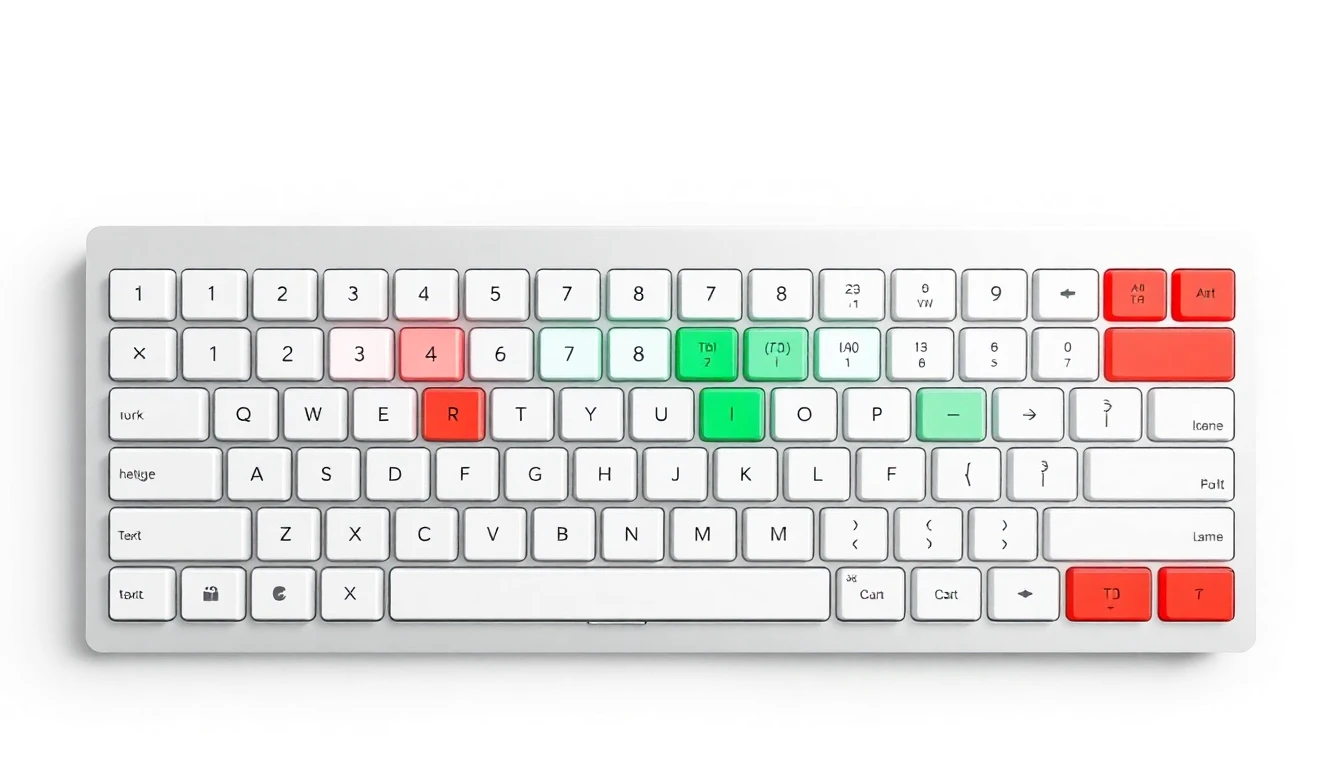
Why Typing Reaction Is Slower Than Click Reaction
Simple click reaction tests measure pure neural-motor speed: see green, click anywhere. Average score: 200-250ms. Typing reaction adds two cognitive layers — letter identification (~50ms) and key location recall (~50-200ms depending on muscle memory). That's why typing reaction times are 150-300ms slower than click reaction times.
This is called "choice reaction time" in cognitive science research. Hick's law says reaction time grows logarithmically with the number of possible responses — going from 1 choice (any click) to 26 choices (any letter) adds ~150ms in expert users and ~300ms in beginners.
Performance Benchmarks
Typing Reaction Time by Age
Typing reaction time depends more on practice than biology. Daily keyboard users (programmers, writers, gamers) maintain fast scores well into their 50s. Below are average typing reaction times by age group based on aggregated test data.
Average Typing Reaction Time (ms) by Age Group
Data based on aggregated benchmark tests across all 26 letters. Daily typists score 50-100ms faster than the averages shown.
Factors That Affect Typing Reaction Time
Touch Typing vs Hunt-and-Peck
Touch typists who keep fingers on home row (ASDF/JKL;) score 150-250ms faster than people who hunt for keys with their eyes.
Keyboard Type
Mechanical keyboards with low-actuation switches (Cherry MX Speed, ~1.2mm) react 10-20ms faster than membrane keyboards (~3.5mm travel).
Letter Frequency Familiarity
Common letters (E, T, A, O) are pressed 50-100ms faster than rare letters (Q, Z, X, J) because of asymmetric muscle memory.
Daily Typing Volume
Programmers and writers who type 10,000+ keystrokes daily score 100-200ms faster than light users. Use builds neural automation.
Polling Rate and Input Lag
1000Hz polling adds <1ms. 125Hz adds 8ms. Wireless 2.4GHz gaming keyboards add 1-2ms; Bluetooth adds 30-100ms — avoid for testing.
Hand Position and Posture
Wrists floating above keyboard adds 30-50ms compared to anchored on a wrist rest. Higher elbows reduce reaction speed.
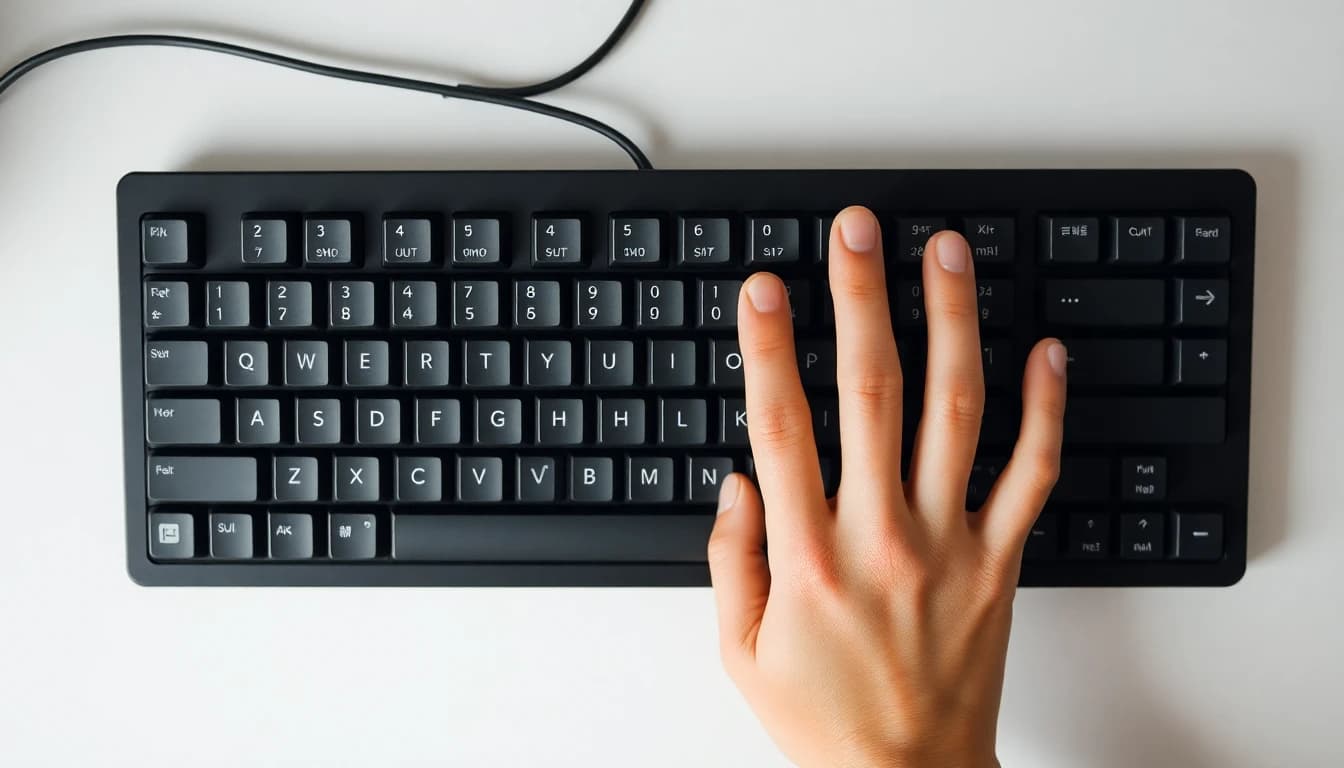
How to Improve Your Typing Reaction Time
Typing reaction is one of the most trainable skills in cognitive testing. Most users improve 100-200ms within 4-6 weeks of daily practice.
Learn touch typing if you haven't already. Even 2 weeks of structured practice (Keybr, Monkeytype) builds the home-row anchor that cuts 150ms off your average.
Practice weak letters. Almost everyone is slow on Q, Z, X, P, J. Targeted drills on these letters bring up your worst-case score, which matters more than your best.
Use a low-latency wired keyboard. Bluetooth keyboards add 30-100ms; wireless 2.4GHz dongles are fine if they advertise <1ms polling.
Type 10-15 minutes daily. Frequency beats duration — short daily sessions build muscle memory faster than weekend marathons.
Anchor your wrists on a wrist rest. Floating wrists waste 30-50ms per keystroke as your fingers travel.
Don't look at the keyboard. Looking down breaks the eye-letter recognition loop and adds 200-400ms per letter. Force yourself to keep eyes on screen.
Warm up before competitive gaming. 60 seconds of WASD or letter drills primes your motor cortex and shaves 30-50ms off in-game reaction.
Where Typing Reaction Speed Matters
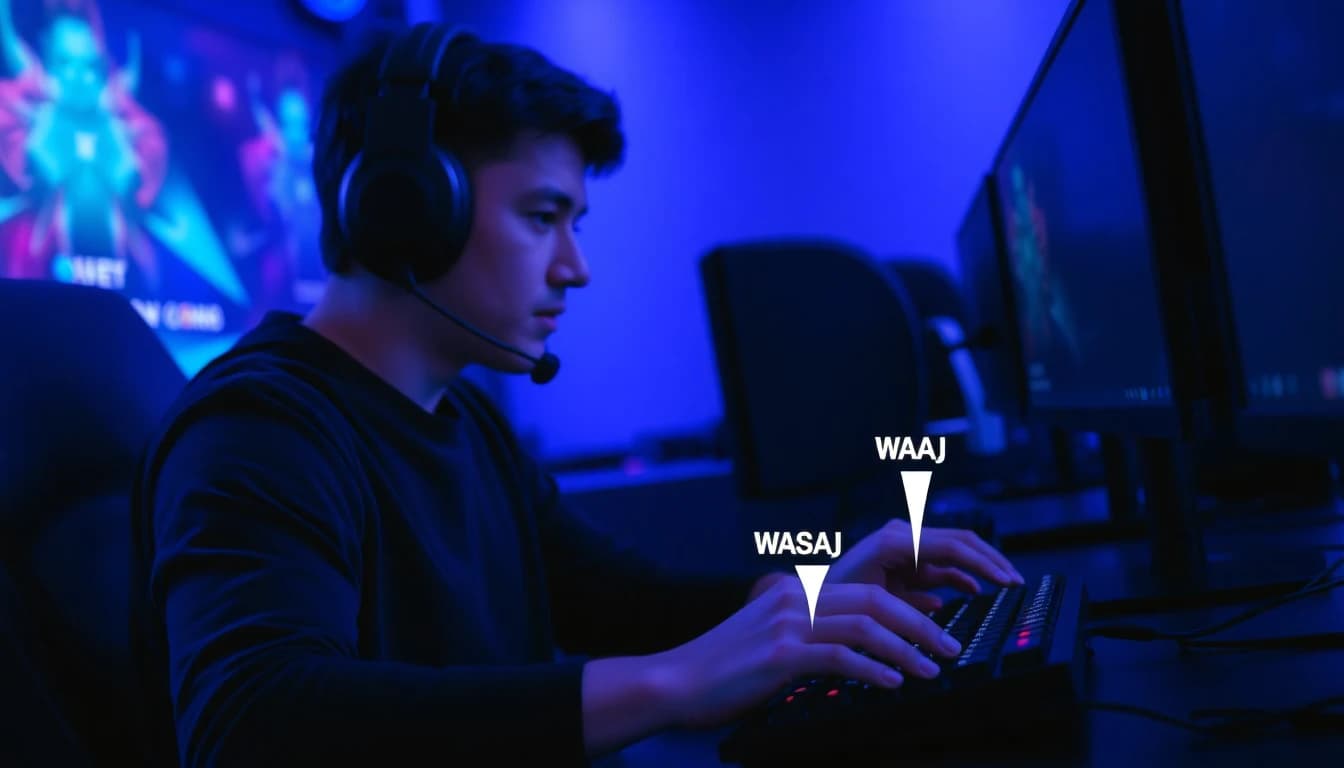
Esports and Competitive Gaming
CSGO, Valorant, and Apex pros press movement and ability keys 250-300ms after stimulus. Faster typing reaction directly translates to faster crouch-peeks and ability casts.
Programming and Software Engineering
Senior developers type code at 60+ WPM with sub-300ms key reaction. Faster typing reduces cognitive load — your brain stays in problem-solving mode instead of waiting for hands.
Live Captioning and Court Stenography
Stenographers reach 225+ WPM with reaction times under 200ms per stroke. Real-time captioning depends on this elite-level reaction speed.
MMO and RPG Combat
WoW raid healers and FFXIV tanks chain 8-12 key abilities per second. Slow typing reaction caps your APM ceiling and limits competitive performance.
The Science Behind Choice Reaction
When a letter appears on screen, the visual cortex identifies it as a letter shape (~50-80ms), then the language-recognition area (Wernicke's area equivalent for letter-name retrieval) tags it with phonetic identity (~30-50ms). The motor cortex then queries muscle memory for that letter's key location (~50-200ms based on practice level).
Once the target key is selected, the motor command travels through the spinal cord to your hand (~30-50ms), then the finger executes the keystroke (~30-50ms). Total typing reaction: 200-400ms in experts, 400-700ms in casual users. This is documented in Hick's law (1952) and refined by Welford (1980), Logan (1988) muscle memory studies, and modern keyboard latency research.
Typing Reaction Time Test FAQ
Common questions about typing reaction speed and what your score means.
Under 300ms is excellent. Most casual typists score 400-500ms. Touch typists hit 300-400ms. Competitive esports players consistently score under 300ms thanks to years of WASD muscle memory that transfers to letter recognition.
Click reaction tests measure pure neural-motor speed (200-250ms average). Typing reaction adds choice — your brain must identify the letter and recall its key position, adding 150-300ms. This is called choice reaction time, governed by Hick's law in cognitive science.
The average typing reaction time is 400-500ms across all 26 letters. Touch typists score 300-400ms. The fastest measured human typing reactions are around 200-250ms, achieved by professional stenographers and elite esports players.
WPM measures sustained word typing over time. Typing reaction time tests raw key-location speed for individual letters — a fundamental building block of WPM. Faster reaction times generally produce higher WPM, but they're not the same metric.
Yes. Mechanical keyboards with low-actuation switches (Cherry MX Speed, 1.2mm) react 10-20ms faster than membrane keyboards (3.5mm travel). 1000Hz polling rate is essential — 125Hz adds 8ms latency. Avoid Bluetooth which adds 30-100ms.
Yes. Most users improve 100-200ms within 4-6 weeks of daily 10-15 minute practice. Touch typing is the biggest single win (cuts 150ms instantly). Targeting weak letters (Q, Z, X, P, J) and using a low-latency wired keyboard further reduces scores.
Common letters (E, T, A, O) are 50-100ms faster than rare letters (Q, Z, X, J) because muscle memory builds asymmetrically with use frequency. Most people see a 100-200ms gap between their best and worst letter. Targeted practice on weak letters closes the gap.
Pro CSGO, Valorant, and Apex players hit 250-300ms typing reaction times. This directly translates to faster crouch-peek timing, ability cast speed, and movement key combos. A 50ms typing reaction improvement is statistically equivalent to a small-but-real K/D ratio gain at high ranks.
Hick's law (1952) states that reaction time increases logarithmically with the number of possible choices. A simple click test (1 choice) takes 200ms. A typing test (26 choices) adds ~150-300ms depending on practice. This is why choice reaction tests are slower than simple reaction tests.
Mobile virtual keyboards add 50-150ms of input lag compared to physical keyboards because of touch-to-event latency. For accurate typing reaction time test results, use a wired physical keyboard on a desktop or laptop with 1000Hz polling rate.