 ReactionTimeTests
Stroop Test
Click the button matching the ink color — not the word's meaning. The classic Stroop Effect measures cognitive inhibition, the same metric used by neuropsychologists since 1935.
Instructions
You will see 20 color words like RED, BLUE, GREEN, YELLOW. Each word is displayed in a colored ink — sometimes matching the word, sometimes not. Click the button for the INK COLOR, not the word's meaning.
What is the Stroop Test?
The Stroop Test is a classic psychology experiment created by J. Ridley Stroop in 1935. It presents color words (like RED) displayed in colored ink (like blue), and asks you to name or click the INK COLOR while ignoring what the word says. Your brain wants to read the word — that's automatic. Suppressing this automatic response and reporting the ink color instead is what makes the test hard.
This conflict between automatic reading and controlled attention is called the Stroop Effect. The reaction-time difference between congruent trials (word "RED" in red ink) and incongruent trials (word "RED" in blue ink) reveals how efficiently your prefrontal cortex inhibits irrelevant information. The bigger the gap, the harder your brain is working — and a healthy young adult typically shows a 100-200ms difference.
The Stroop Effect Explained
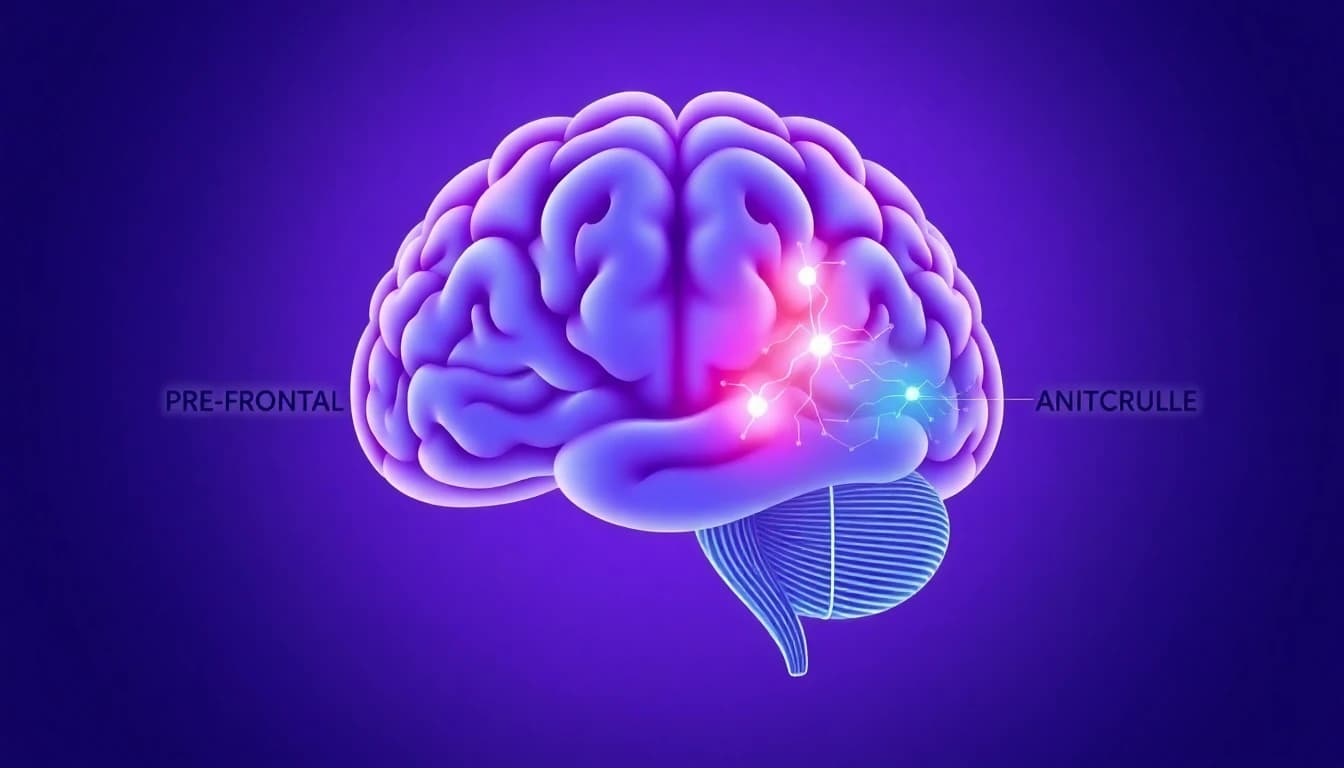
Reading is overlearned. By age 10, you automatically read any word you see, faster than you can think about it. That's why "BLUE" written in red ink feels jarring — your reading reflex fires first, then your conscious mind has to override it and report "red" instead. This override is called cognitive inhibition, and it's run by the prefrontal cortex and anterior cingulate cortex (ACC).
On this test, you'll see two types of trials. Congruent trials (word matches ink — "RED" in red) are easy; incongruent trials (word conflicts — "RED" in blue) are slow and error-prone. The size of the difference is your personal Stroop Effect score. A healthy adult: 100-200ms gap. Kids and older adults: 200-400ms. People with ADHD, dementia, or severe sleep deprivation: 400ms+ gaps with more errors.
Stroop Test vs Color Reaction Test
Both tests use colors, but they measure different cognitive skills. A color reaction test (like our /color page) measures pure color discrimination speed — how fast you can identify a color and act. The Stroop test measures cognitive inhibition under conflicting information — how well your brain suppresses an automatic response (reading) to give a controlled one (naming ink color).
For clinical research, the Stroop test is the gold standard because reading is an unavoidable, automatic process that everyone shares. The conflict it creates is universal, which makes Stroop scores comparable across people, ages, and cultures. That's why it's been used in over 700 published studies on ADHD, dementia, brain injury, and executive function.
Stroop Effect Size by Age
Cognitive inhibition follows a clear developmental curve. Young children (under 7) have huge Stroop Effects because the prefrontal cortex is still developing. Adults aged 20-35 have the smallest gaps. After 50, the Stroop Effect grows again as executive function gradually declines.
Average Stroop Effect Size (ms) by Age Group
Data based on MacLeod (1991) meta-analysis of 50+ Stroop studies plus contemporary aggregated test data. Individual results vary ±50ms.
Factors That Affect Stroop Performance
Age and Executive Function
Prefrontal cortex matures by age 25 and gradually declines after 50. Stroop Effect grows ~5-10ms per decade after 60.
Reading Fluency
More fluent readers show larger Stroop Effects because word reading is more automatic. Non-fluent readers have smaller gaps because reading is less interfering.
ADHD and Attention Disorders
ADHD adults score 100-200ms larger Stroop Effects and 2-3× more errors on incongruent trials. This is a documented clinical marker.
Sleep and Fatigue
Sleep deprivation degrades prefrontal function selectively. 24 hours awake can add 100-200ms to Stroop Effect — similar to mild traumatic brain injury.
Bilingualism
Bilinguals show 20-50ms smaller Stroop Effects on average. Constant language-switching builds inhibition skills that transfer to non-language tasks.
Caffeine and Stimulants
200mg caffeine reduces Stroop Effect by 20-40ms in habitual non-users. ADHD stimulant medication (methylphenidate) shows even stronger effects in research.

How to Improve Stroop Performance
The Stroop Effect is partly fixed (your brain anatomy) and partly trainable (practice and lifestyle). Most adults can shave 30-60ms off the gap with focused effort.
Practice attention games daily. Tasks like task-switching, n-back, and inhibition drills train the same prefrontal circuits.
Sleep 7-9 hours nightly. Stroop Effect is one of the most sleep-sensitive cognitive metrics — even one bad night shows up clearly.
Exercise aerobically 30+ minutes most days. Aerobic exercise increases prefrontal blood flow and consistently improves Stroop scores in research.
Meditate 10+ minutes daily. Mindfulness practice strengthens attentional control and reduces Stroop interference in 8-week studies.
Limit alcohol. Even moderate alcohol use (2+ drinks/day) measurably degrades Stroop performance over weeks.
Learn a second language. Long-term bilingualism is one of the strongest documented protectors against age-related Stroop decline.
Reduce chronic stress. Cortisol from chronic stress directly impairs prefrontal function and inflates the Stroop Effect.
Clinical Applications of the Stroop Test

ADHD Assessment
Larger Stroop Effects and more errors on incongruent trials are documented markers of ADHD. The test is part of standard neuropsychological batteries.
Dementia Screening
Early-stage Alzheimer's and frontotemporal dementia show inflated Stroop Effects before memory symptoms become obvious. Used in research-grade cognitive screening.
Traumatic Brain Injury
Concussion and TBI selectively damage prefrontal-attention networks. Stroop performance is a sensitive marker for return-to-play decisions in sports medicine.
Executive Function Research
The Stroop test is one of the three core executive function measures (alongside Wisconsin Card Sort and Trail Making B). Used in 700+ published studies since 1935.
The Science Behind the Stroop Effect
When you see "BLUE" written in red, two neural pathways activate simultaneously: a fast automatic reading network (left temporal lobe, ~200ms) and a slower color-naming network (V4 → prefrontal cortex, ~350ms). Both produce a response candidate. The anterior cingulate cortex detects this conflict and signals the prefrontal cortex to inhibit the reading response and let the color response win.
This conflict-monitoring system is documented in fMRI studies (Botvinick 2001, MacLeod & MacDonald 2000) showing ACC activation specifically on incongruent trials. The Stroop Effect's exact size — typically 100-200ms in healthy adults — is the time it takes the prefrontal cortex to override the automatic reading response. Larger effects indicate weaker top-down inhibition. The test has been validated in over 700 studies across 90 years.
Stroop Test FAQ
Common questions about the Stroop test and what your score means.
The Stroop test is a classic psychology experiment from 1935 that measures cognitive inhibition. You see color words (like RED) written in colored ink (like blue), and must report the ink color while ignoring the word. The difficulty comes from suppressing your automatic reading response.
A healthy young adult typically shows a 100-200ms Stroop Effect (the time difference between matching and conflicting trials) with 90%+ accuracy. Smaller gaps indicate stronger executive function. Adults over 60 average 200-300ms, while ADHD adults often show 300ms+.
The Stroop test measures cognitive inhibition — your brain's ability to suppress an automatic response (reading the word) to give a controlled response (naming the ink color). It also taps selective attention and executive function, all run by the prefrontal cortex and anterior cingulate cortex.
The Stroop Effect is the slowdown that happens when a word and its ink color conflict. Reading "RED" written in red (congruent) is fast. Reading "RED" written in blue (incongruent) is slower by 100-200ms in healthy adults. This gap is your personal Stroop Effect score.
Congruent trials show a color word in matching ink (RED in red) — these are fast and easy. Incongruent trials show conflict (RED in blue) — these are slow because your brain must override the reading response. The Stroop test scores compare your speed on both types.
American psychologist John Ridley Stroop published the test in 1935 as part of his doctoral dissertation at George Peabody College. His paper "Studies of interference in serial verbal reactions" is one of the most cited works in psychology, with 17,000+ citations.
Adults with ADHD consistently show larger Stroop Effects (more interference from the word) and more errors on incongruent trials. This pattern reflects weaker prefrontal inhibition, which is a core feature of ADHD. Stroop is part of standard neuropsychological ADHD test batteries.
An inflated Stroop Effect can be an early sign of frontotemporal dementia and Alzheimer's, often before memory symptoms appear. However, a single test isn't diagnostic — clinicians use Stroop alongside other measures. Consult a neuropsychologist if you're concerned about cognitive changes.
No. This Stroop test runs entirely in your browser with no signup or login required. Your test results are not stored on any server — they exist only during your session. Use it for free as many times as you want.
A color reaction test (like our /color page) measures how fast you can detect a color and respond. The Stroop test specifically measures cognitive inhibition — the ability to suppress an automatic response under conflict. They use similar visuals but test different mental skills, both useful for different purposes.